
The Government of India has strengthened its pharmaceutical traceability requirements through the June 2026 Schedule H2 amendment. The regulation expands Schedule H2 beyond the top 300 brands to include all vaccines, antimicrobials, anti-cancer drugs, and narcotic/psychotropic substances, with phased implementation through July 2027 and July 2028.
For pharmaceutical manufacturers, this isn’t just another compliance update—it’s a government mandate requiring robust product identification, QR code implementation, and end-to-end traceability across a broader range of medicines. It means:
1. QR Code-Based Product Identification
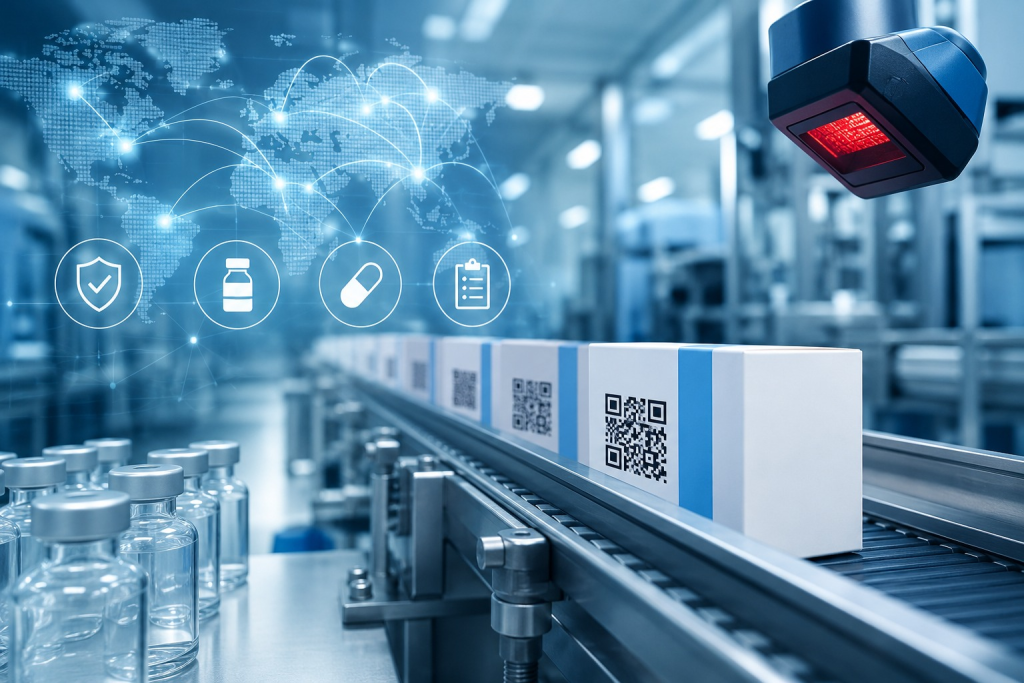
Manufacturers must print or affix a barcode or QR code on the primary packaging of applicable medicines, or on the secondary packaging where primary packaging cannot accommodate it. The QR code must support product authentication and verification across the pharmaceutical supply chain.
2. Capture the Prescribed Regulatory Data
Each QR code must contain the mandatory data elements notified under Schedule H2, including the Unique Product Identification Code, drug name, manufacturer details, batch number, manufacturing and expiry dates, manufacturing licence number, and excipient information. Maintaining accurate and consistent product data becomes essential for compliance.
3. Strengthen Product Authentication and Traceability
The expanded Schedule H2 aims to improve authentication and traceability throughout the pharmaceutical supply chain, helping manufacturers strengthen product integrity while reducing the risk of counterfeit and substandard medicines reaching patients.
4. Prepare for Phased Compliance
The expanded Schedule H2 requirements will be implemented in phases through July 2027 and July 2028. Manufacturers should assess their existing packaging, labeling, and traceability processes early to ensure operational readiness and minimize implementation challenges before the compliance deadlines.
Manufacturers that prepare early will have the advantage, not only in meeting regulatory requirements but also in improving supply chain visibility, recall readiness, and product integrity.
Building Beyond Compliance
While Schedule H2 defines the regulatory requirements, many pharmaceutical manufacturers are using this regulatory shift as an opportunity to modernize their traceability infrastructure. Implementing a scalable digital traceability platform not only simplifies compliance but also improves operational visibility, recall readiness, and supply chain resilience.
While Schedule H2 specifies the information that must be carried via QR codes, adopting GS1-based identification standards helps manufacturers establish consistent product identification, improve interoperability across supply chain partners, and prepare for evolving domestic and global traceability requirements.
OCX Labs supports pharmaceutical manufacturers through:
- GS1-based product identification, compliant QR/barcode generation, serialization, and aggregation to establish a standardized digital identity while supporting Schedule H2 data requirements and packaging compliance.
- Asset and batch-level traceability to improve visibility across manufacturing, packaging, warehousing, and distribution.
- End-to-end supply chain traceability with digital product records that support product authentication and movement tracking.
- Recall management and regulatory reporting using centralized batch and distribution records for faster investigations.
- Customer engagement and loyalty programs that leverage QR-enabled product identities to support authentication, educational campaigns, rewards, and stronger stakeholder engagement across the pharmaceutical value chain.
Don’t wait for the compliance deadline to discover gaps in your traceability system.
Get in touch to explore how you can prepare for Schedule H2 with confidence.